
Tackling flood risk in Keswick
Lynne Jones, Chair, Keswick Flood Action Group
Keswick is a market town located in the Lake District National Park. Keswick Flood Action Group was formed after serious flooding in 2005 to help the community reduce the risk of further flooding. Over the last two years the group have secured funding to employ a lengthsman, someone who works to ensure drainage systems are maintained across the local area.
“Over the years we’ve tried, and failed, to get folk to ‘Adopt A Drain’ and we are forever pointing locals to the county council’s ‘Report Blocked Drains’ link.
“As a tourist town, with a high percentage of housing stock taken up by holiday lets (around a third are second homes or self-catering rentals) and an aging demographic, we’ve struggled to find enough people to get a reliable system in place.
“However, there’s a lot to be said for traditional methods.
“Having bemoaned the loss of the old system using lengthsmen, and, recognising our councils don’t have the funding to do everything, this is the second winter we’ve gone back to basics, and it really works for us.
“We have Ben, who is self-employed and works as our lengthsman through the winter months on a three-week schedule to clean screens and check on the main culverts and road drainage gullies each month.
“We can also text Ben location details if a new issue arises. He’s a local lad, with a background in farming and landscaping, so he knows the area well and has taken our (considerable) list of known drainage trouble spots and created a logical tour of them for his rota. With the advantages of mobile phones these days he can take before and after photos if need be.
“Setting the system up initially was a lot of work for Claire, our Community Emergency Support Co-ordinator. The council were keen to ensure Ben was properly trained and that support was in place. As Ben is self-employed, his insurance covers his hours, and he has the necessary qualifications, transport, tools and safety equipment. And he can deal properly with any waste.
“The funding has come through community grants through CiFR (Cumbria Innovative Flood Response. There’s a fixed budget for a set number of hours. Initially this was one, eight-hour day per week from October to March. However, Claire was able to tweak the budget to allow for a day every other week through the spring/summer to stay on top of weeds and brambles around the culverts.
“The next grant application will be for 10-hours a week through the wettest six months, and fortnightly through the summer. As and when that runs out, we’ll have to see where else we can look for funding.
“Claire has liaised with the County Council to help their team, sharing Ben’s rota, so there’s less urgency for them for time spent on checking and clearing general culverts. They can then focus on the structures that require inspection, but we can also report up on any significant issues – so everyone pulls together.
“The scheme has been very successful in reducing surface water flood risk. I’d encourage other flood groups to consider it as a possible solution. That said, I am very mindful of – and hugely thankful for – the support our Flood Action Group has from both our Town and County Councils. It’s founded on quite a few years of building relationships and respect. Teamwork makes the dream work as they say!”
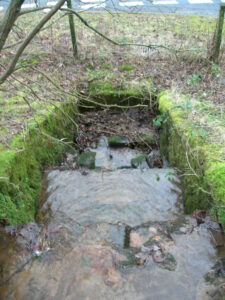
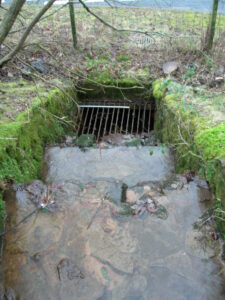
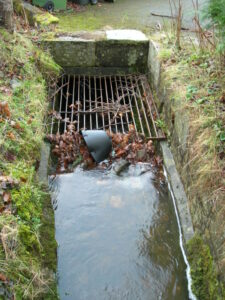
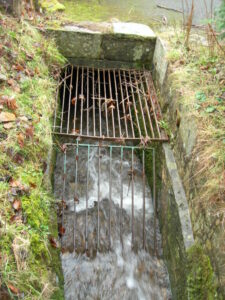
Before and after images of drainage areas maintained by the lengthsman in Keswick.